- Part I: To determine the density of two solids, one of which is heavier and the other lighter than an equivalent volume of water.
- Part II: To measure accurately the density of various liquids by means of the Westphal balance.
- Part III: To measure the specific gravity of these liquids by means of a hydrometer.
METHOD: A body is weighed in air and then immersed
in a liquid. The apparent loss in weight of the body when immersed in
the liquid is, by Archimedes’ principle, equal to the weight of liquid
displaced by the body. From these measurements the density and specific
gravity of either the solid body or the liquid may be determined.
THEORY: The density of a
substance is defined as its mass per unit volume and in the metric
system of units is measured in grams per cubic centimeter. The specific
gravity of a substance is defined as the ratio of the mass or weight of
the substance to the mass or weight of an equal volume of water and is
a pure number having zero dimensions.
A convenient method for determining densities or specific gravities
is one which uses the principle of Archimedes, namely, that when a body
is immersed in a fluid there is exerted on the body a vertical upward
force equal to the weight of fluid displaced.
 Proof of Archimedes’ Principle: Suppose aright circular cylinder of height h is immersed in a liquid of density d gm per cm3. The bottom of the cylinder is at a depth of h2 cm and the top at a depth h cm below the surface of the liquid (Fig. 1) where h = (h2 − h1) .
The pressure on the liquid at depth h1 is p1 = B + h1gd dynes per cm2, where B is atmospheric pressure. The total downward force on the upper surface of the cylinder is F1 = p1A
dynes where A is the area of cross section of the cylinder. Similarly
the total upward force on the bottom of the cylinder is F2 = p2A dynes.
Since the pressure in a fluid acts at right angles to any surface in
contact with it, the pressure on the sides of the cylinder is
everywhere horizontal and has no vertical component. Hence the total
upward force in dynes on the cylinder is
F2−F1 = p2A = (h2 − h1)Agd = hAgd (1)
But hA = V, the volume of the cylinder, so that
F2−F1 = Vgd (2)
or the resultant upward force in dynes is equal to the weight of fluid displaced.
While this proof of Archimedes’ principle is for a particularly
simple geometrical object, the principle is true for an object of any
shape which is immersed in a fluid.
Application of Archimedes’ Principle: 1. Suppose a body has a density of D grams per cm3
and amass of M grams. The volume of the body is V = M/D and its weight
in air is Mg dynes. The weight (MLg) of the body when immersed in a
liquid of density d is, by Archimedes’ principle, MLg = Mg – Vdg dynes.
Thus ML = M – Vd or ML = M – Md/D.
Since ML and M may be measured by means of a balance, it follows
that if the density d of the liquid-say water-is known, the density D
of the body may be calculated from
D = Md/(M − M
L)
+ نوشته شده در جمعه نوزدهم آبان ۱۳۹۱ ساعت 18:52 توسط مریم جمشیدی
|


 بلاك
و همكارانش براي اندازهگيري مستقيم جرم اين عناصر فوق سنگين، ابتدا نياز
داشتند كه آنها را توليد كنند. براي اين كار، آنها از يك شتابدهنده
استفاده كردند كه اتمهاي كلسيوم را به هدفي از جنس سرب شليك ميكرد. در
موارد نادري، اين هستههاي اتمي با هم برخورد ميكردند و طي فرآيند همجوشي
هستهاي، هستهاي سنگينتر را ميساختند. تقريبا يك بار در هر ثانيه،
شتابدهنده يك ايزوتوپ از اتم نوبليوم را توليد و آنرا آشكار ميكرد. اين
اتم مصنوعي بسته به تعداد نوترونهايي كه داشته باشد، ميتواند تنها به مدت
چند هزارم ثانيه، و يا براي دقايق متمادي دوام بياورد.


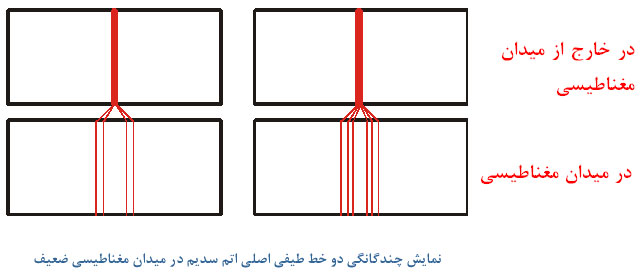
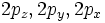 از نظر انرژي برابرند و در غياب ميدان مغناطيسي نميتوان تفاوتي بين
الكترونهايي كه اين اوربيتالها را اشغال كردهاند، قائل شد، ولي وقتي طيف
نشري اتم هيدروژن در ميدان مغناطيسي مورد مطالعه قرار ميگيرد، وضعيت
پيچيدهتري پيدا ميكند. يعني هر خط طيفي حاصل از چندگانگي خطوط طيفي كه
خارج از ميدان مغناطيسي بدست ميآيد، در ميدان مغناطيسي به چند خط طيفي
فوقالعاده نزديك به يكديگر تجزيه ميشود. مثلاً در مورد اتم سديم، همانطور
كه در شكل نشان داده شـده است، اين رويداد موجب ميشود كه هر يك از دو خط
طيفي اصلي آن به چندين خط تفكيك شود. چنين وضعيتي كه به ساختار ظريف خطوط
طيفي موسوم است، اولين بار توسط زيمان (در سال 1896) مشاهده شد و اثر زيمان
ناميده ميشود. اين اثر، با قبول دو درجه آزادي براي حركت الكترون يعني در
نظر گرفتن دو عدد كوآنتومي اصلي و فرعي براي مشخص كردن انرژي الكترون در
چرخش به دور هسته، قابل بررسي نيست. بلكه براي توجيه آن بايد سه درجه آزادي
براي حركت الكترون يا به بياني ديگر، عدد كوآنتومي ديگري علاوه بر اعداد
كوآنتومي اصلي و فرعي براي مشخص كردن دقيق وضعيت الكترون در فضاي اطراف
هسته بايد در نظر گرفت. براي اين منظور، بايد قبول كرد كه وقتي الكترون،
بدون وجود يك ميدان مغناطيسي خارجي، به دور هسته اتم ميچرخد مرجعي وجود
ندارد تا بتوان سطح مشخصي براي مدار چرخش آن در نظر گرفت. به بيان ديگر،
سطح مدار چرخش آن كاملاً اختياري است. اما وقتي الكترون در يك ميدان
مغناطيسي خارجي به دور هسته ميچرخد، سطح مدار چرخش آن نسبت به راستاي
ميدان مغناطيسي تغيير ميكند. زيرا الكترون (ذره باردار) ضمن چرخش به دور
هسته، در نقش يك مغناطيس كوچك (با ممان مغناطيس
 ) عمل ميكند. در نتيجه، در يك ميدان مغناطيسي (با شدت
 )،
تحت تأثير قرار گرفته و سطح مدار چرخش آن دستخوش تغييراتي ميشود. اين
تغييرات، ديگر اختياري نبوده بلكه از محدوديت كوآنتومي پيروي ميكند.
بطوريكه تصوير بردار ممان مغناطيسي حاصل از چرخش الكترون بر روي اين سطوح،
نسبت به راستاي ميدان، همواره بايد مضرب درستي از
 باشد. اين مضرب درست را كه به عدد كوآنتومي مغناطيسي موسوم شده است، با
 نشان ميدهند.